
-
Yuri Gold GC Wheel
Regular price Rs. 26,400.00Regular priceUnit price per
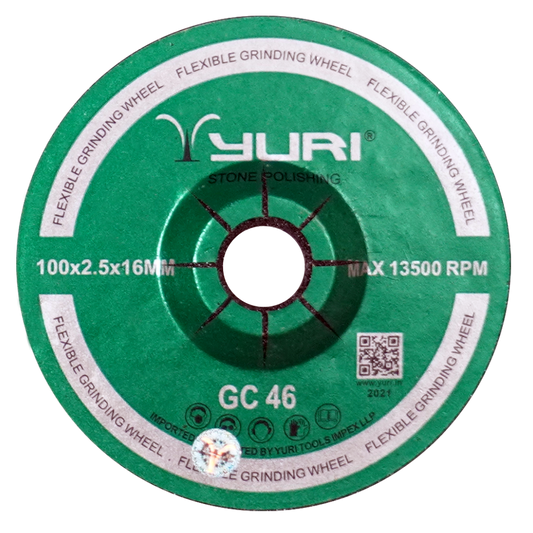
GC Wheels for Clean Grinding on Hard and Brittle Materials
GC wheels are used when the job needs clean grinding on harder, more brittle materials where regular grinding wheels may not give the right finish or control. In many workshops, these wheels are preferred for sharpening, edge correction, tool maintenance, and controlled grinding on materials such as carbide, stone, cast iron, glass, ceramics, and other hard surfaces.
Yuri GC wheels are made for users who want steady cutting action, smoother grinding, and better control while working on demanding surfaces. A grinding wheel may look simple from the outside, but the right wheel makes a big difference in finish quality, heat control, operator comfort, and wheel life. That is why choosing the correct GC wheel is important for repair shops, fabrication units, tool rooms, maintenance teams, and small industrial setups.
What Makes GC Wheels Useful?
GC usually refers to green silicon carbide wheels. These wheels are known for their sharp grain structure, which helps them cut into hard and brittle materials more effectively. Instead of only rubbing against the surface, the abrasive grains keep exposing fresh cutting edges during use. This helps the wheel stay effective for sharpening, shaping, and surface correction work.
In a real workshop, this matters a lot. When a worker is sharpening a carbide-tipped tool or cleaning a hard edge, the wheel should remove material without creating too much heat or damaging the part. A good GC wheel gives that extra control. It helps the user work slowly and accurately, especially where the finish or edge shape matters.
GC wheels are also useful when the workpiece cannot tolerate rough handling. For example, a brittle material can chip if the wrong wheel is used. With the right wheel grade and steady handling, the user can get a cleaner result with less wastage.
Why Choose Yuri GC Wheels?
Yuri GC wheels are built for practical Indian workshop conditions where tools are used every day, often for long hours. The focus is on consistent grinding, dependable bonding, and a balanced feel during use. A wheel that vibrates too much or wears unevenly can make the job slower and less accurate, so stability matters just as much as cutting power.
These wheels are suitable for professionals who need reliable performance for repeated grinding and sharpening tasks. Whether the job is small tool-room correction or regular maintenance work, Yuri GC wheels are designed to support smooth working and controlled material removal.
For users who also handle general metal grinding, Yuri offers DC wheels for regular metal grinding wheel applications. This makes it easier to keep separate wheels for separate jobs instead of depending on one wheel for everything.
Where GC Wheels Are Commonly Used
GC wheels are commonly used in tool rooms, maintenance shops, repair workshops, fabrication support areas, and small industrial units. They are useful wherever hard and brittle material grinding is part of regular work. Many users keep GC wheels for specialized grinding while using other abrasive wheels for general steel, iron, or cutting tasks.
These wheels are often used for sharpening carbide tools, grinding cast iron parts, cleaning hard surfaces, shaping stone or ceramic edges, and handling controlled finishing jobs. The exact result depends on the wheel size, grade, machine condition, operator handling, and the material being worked on.
GC Wheels, DC Wheels, WA Wheels, and Cutting Wheels
Not every wheel is made for the same job. GC wheels are usually selected for hard and brittle materials. DC wheels are more common for general grinding applications, especially where users need a metal grinding wheel for everyday workshop work. WA wheels are often selected when the work calls for cleaner, sharper grinding on certain steels and precision jobs. Cutting wheels are different again because they are designed for slicing through material, not grinding the surface.
This difference is important because using the wrong wheel can reduce finish quality, slow down the work, or even create safety issues. A grinding wheel should be used for grinding, and a cutting wheel should be used for cutting. It sounds simple, but this mistake is common in busy workshops when workers are trying to finish the job quickly.
How to Choose the Right GC Wheel
Before choosing a GC wheel, first look at the material you are working on. If the job involves carbide, ceramic, glass, stone, cast iron, or other hard and brittle surfaces, a GC wheel may be the right choice. If the work is mainly mild steel or general fabrication grinding, another wheel type may be more suitable.
Wheel size should match the machine. Do not use a wheel that does not fit properly on the grinder or machine spindle. Also check the bore size, wheel thickness, maximum RPM rating, and machine guard clearance. These small checks save time and help avoid unnecessary risk.
The finish requirement also matters. If you only need rough shaping, you may choose a different grade compared to a job that needs cleaner finishing or sharper edge control. For longer wheel life and better results, avoid forcing the wheel. Let the abrasive do the work with steady pressure.
Practical Applications of Yuri GC Wheels
Yuri GC wheels are useful for sharpening, shaping, and grinding tasks where the material is too hard or brittle for regular wheel use. They can support tool maintenance, carbide edge correction, cast iron grinding, ceramic edge work, stone surface adjustment, and workshop repair jobs. In many small manufacturing units, a GC wheel is kept as a dependable option for jobs that need careful handling.
The best way to get good results is to match the wheel with the machine and the job. A good wheel can only perform well when it is used correctly. Clean mounting, proper speed, steady pressure, and safe handling all make a visible difference in the final result.
Who Can Use Yuri GC Wheels?
- Tool-room workers
- Maintenance technicians
- Fabrication support teams
- Repair workshops
- Stone and ceramic work users
- Carbide tool sharpening users
- Industrial units that need controlled grinding on hard materials
- Workshops handling mixed-material jobs
Safety and Care Tips
Grinding wheels should always be handled with care. Check the wheel before mounting it and do not use it if there are cracks, chips, or signs of damage. Make sure the wheel is fitted properly and the guard is in place before starting the machine. Let the wheel run freely for a short time before touching the workpiece.
Do not press the workpiece too hard against the wheel. Extra pressure does not always mean faster grinding. In many cases, it creates heat, reduces wheel life, and affects the finish. Use light and steady pressure, especially when working on brittle materials. Always wear safety glasses, gloves, and suitable protective clothing while grinding.
Common Jobs Handled with GC Wheels
- Sharpening carbide tools and hard edges
- Grinding cast iron parts
- Controlled grinding on stone and ceramic materials
- Repair and maintenance work in small workshops
- Tool-room finishing and correction work
- Surface adjustment on hard and brittle materials
Before Buying a GC Wheel, Check These Points
- Material type and hardness
- Wheel size, bore size, and thickness
- Machine RPM compatibility
- Required finish and grinding control
- Whether the job is grinding, sharpening, or cutting
- Operator safety and machine guard condition
Quick Wheel Selection Guide
| Wheel Type | Best Used For | Simple Buying Note |
|---|---|---|
| GC Wheels | Hard and brittle materials like carbide, stone, ceramic, glass, and cast iron | Choose when the work needs clean grinding and better control on tough surfaces. |
| DC Wheels | General metal grinding wheel work and regular workshop grinding | Good for daily metal grinding jobs where surface removal is the main purpose. |
| WA Wheels | Precision grinding wheel work on selected steels and cleaner finishing tasks | Useful when sharper, cleaner grinding is required on suitable materials. |
| Cutting Wheels | Cutting metal, rods, pipes, sheets, and fabrication material | Use a cutting wheel or metal cutting wheel only for cutting, not side grinding. |
Related Wheel Options from Yuri
If your work involves softer steels or finishing jobs where a precision grinding wheel is needed, you can also compare Yuri WA wheels. For cutting rods, pipes, sheets, and fabrication material, Yuri cutting wheels are a better fit because they are made for cutting wheel and metal cutting wheel applications, not surface grinding.
This simple separation helps workshops work more safely and get better results. Use GC wheels for hard and brittle material grinding, DC wheels for common metal grinding, WA wheels for selected precision grinding work, and cutting wheels for clean cutting jobs.
FAQs
What are GC wheels used for?
GC wheels are mainly used for grinding hard and brittle materials such as carbide, cast iron, stone, ceramic, glass, and similar surfaces. They are also useful for sharpening and controlled grinding tasks.
Are GC wheels suitable for metal grinding?
GC wheels can be used on certain hard materials, but for general metal grinding wheel work, DC wheels may be a better fit depending on the material and application.
What is the difference between GC wheels and WA wheels?
GC wheels are usually preferred for hard and brittle materials, while WA wheels are often used for selected steel grinding and cleaner precision grinding wheel applications.
Can I use a GC wheel for cutting?
No, GC wheels are meant for grinding and sharpening work. For cutting tasks, use proper cutting wheels or a metal cutting wheel designed for that purpose.
How do I improve the life of a GC wheel?
Use the correct machine speed, avoid excess pressure, mount the wheel properly, and choose the right wheel grade for the material. Safe handling and proper storage also help increase wheel life.
Explore Yuri GC Wheels
Yuri GC wheels are made for users who need dependable grinding performance on hard and brittle materials. They are practical for tool rooms, repair work, maintenance teams, fabrication support, and workshops where clean grinding and controlled material removal matter.
If your work involves sharpening, shaping, or grinding harder surfaces, Yuri GC wheels give you a reliable option for everyday use. Choose the right wheel size, match it with the correct machine, follow safe operating practices, and the grinding result becomes smoother, safer, and easier to control.